
Last Updated on September 2, 2026 by Dr. Julie Kim
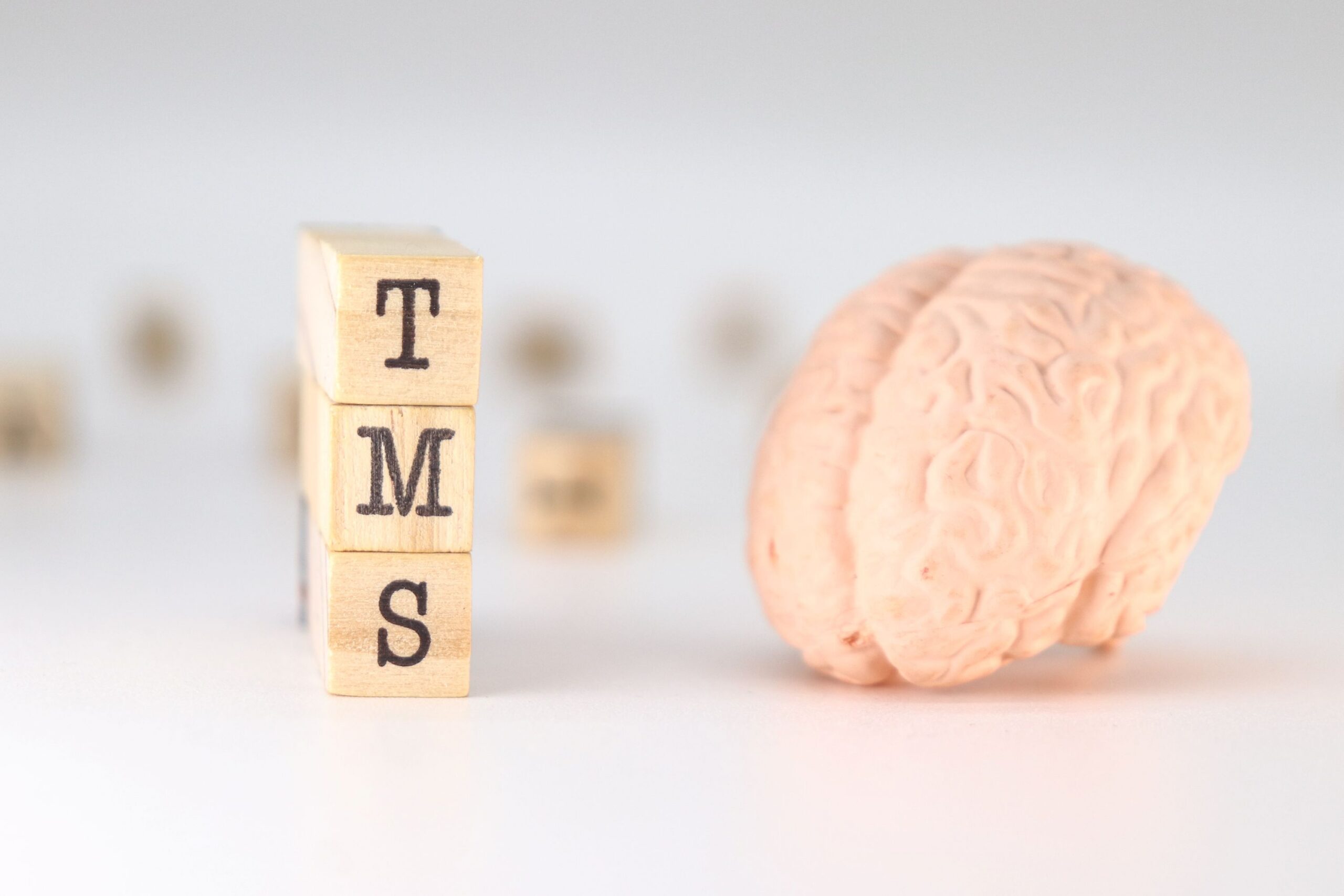
TMS therapy, or Transcranial Magnetic Stimulation, is a non-invasive, FDA-approved brain stimulation treatment that uses precisely targeted magnetic pulses to stimulate specific regions of the brain. For patients in Tucson, AZ who are researching options for treatment-resistant depression or seeking advanced neurological care, understanding what TMS therapy is, how it works, and how it compares to newer alternatives can help you make a more informed decision. Whether you are exploring TMS for the first time or have already tried other treatments without satisfying results, this page will walk you through what current research supports, what you can expect, and what options are available to you locally.
To speak with a specialist, we invite you to reach out to our team.
What Is TMS Therapy and How Does It Work?
TMS therapy delivers targeted magnetic pulses to specific areas of the brain through a coil placed gently against the scalp. These pulses are designed to stimulate neural activity in regions that may be underactive, particularly in patients experiencing major depressive disorder. The treatment is conducted while the patient remains fully awake and seated comfortably, and sessions typically last between 20 and 40 minutes depending on the protocol used.
TMS therapy is FDA-approved for the treatment of major depressive disorder in adults who have not responded adequately to antidepressant medication. Because it does not require anesthesia and does not involve systemic medication, it is well-tolerated by most patients. Most patients complete a course of treatment over several weeks, attending sessions on a consistent schedule.
At our Tucson practice, we offer standard TMS therapy as one of two brain stimulation modalities. However, we also offer MeRT, which stands for Magnetic e-Resonance Therapy. MeRT builds on the same foundational technology as TMS but incorporates a personalized qEEG and EKG brain analysis prior to treatment, allowing protocols to be tailored to each patient’s unique brain activity patterns. To understand how these two approaches differ, visit our detailed comparison of TMS vs MeRT Therapy and what makes each approach distinct.
Both approaches use magnetic stimulation, but MeRT’s individualized design may offer a more precise fit for patients whose neurological profiles fall outside the standard treatment parameters that conventional TMS addresses.
TMS Therapy for Depression and PTSD: What Research Supports
The most well-established application of TMS therapy is in the treatment of major depressive disorder. Research suggests that repeated magnetic stimulation of the left dorsolateral prefrontal cortex, a region commonly associated with mood regulation, may help reduce depressive symptoms in patients who have not responded to one or more antidepressant medications. TMS therapy has been studied extensively in this context, and its FDA-approved status for this indication reflects a substantial body of clinical evidence.
For patients with PTSD, TMS therapy may also be a relevant option. Military veterans and active-duty service members with PTSD who are covered under TRICARE may have coverage for TMS therapy. Our practice works with TRICARE for this specific population, and we encourage eligible patients to learn more about TRICARE coverage for brain therapy at our Tucson center.
For patients dealing with other neurological concerns, including traumatic brain injury, cognitive challenges, anxiety, or sleep difficulties, MeRT therapy may be a more appropriate starting point. These conditions are addressed through our individualized MeRT protocols rather than standard TMS. You can explore the full range of neurological conditions we address with MeRT therapy to see whether your concerns align with what our team has experience treating.
Individual results may vary, and no treatment outcome can be guaranteed. We encourage all patients to schedule a consultation to discuss whether TMS therapy or MeRT therapy is the right fit for their specific situation.
TMS Therapy vs. MeRT: Understanding Your Treatment Options
Standard TMS: A Proven Starting Point
Standard TMS therapy follows a fixed protocol designed for the average patient profile. It uses a consistent frequency and targeting approach, and while it has demonstrated meaningful results in clinical trials for depression, it does not account for individual variation in brain wave patterns or neural synchrony. For patients who fit the standard protocol well, TMS therapy can be a valuable tool.
MeRT: A Personalized Alternative
MeRT therapy begins with a non-invasive qEEG and EKG brain analysis that maps each patient’s unique brain activity before any treatment begins. The resulting data allows our clinical team to customize the frequency, location, and timing of magnetic stimulation to match the patient’s individual brain patterns. This level of personalization is what distinguishes MeRT from conventional TMS therapy and is the primary reason our practice focuses on MeRT for most neurological conditions beyond depression.
Because MeRT is drug-free and non-invasive, it is well-tolerated by most patients, including those who may be sensitive to medication side effects or who prefer to avoid pharmaceutical approaches. To see real patient experiences with this therapy, you can browse MeRT patient testimonials.
For patients specifically researching how TMS therapy may help with depression, we also offer TMS for depression at our Tucson location as an on-label, FDA-approved treatment option.
Why Choose Brainwave Neuro Performance in Tucson, AZ?
Brainwave Neuro Performance is led by Dr. Julie Kim, a board-certified Internal Medicine physician with over 25 years of clinical experience. Dr. Kim has served as Medical Director of the Brain Treatment Center since 2013 and is a Fellow of the American College of Physicians. She is recognized for pioneering safety protocols and physician training in both TMS and MeRT therapy, and she is regularly invited to speak on brain health and performance optimization.
Our Tucson practice is one of a limited number of centers in the region offering both TMS therapy and MeRT therapy under the guidance of a physician with this depth of experience in advanced brain stimulation. Patients traveling from Tucson, Marana, and the surrounding communities choose our center because of Dr. Kim’s compassionate, patient-centered approach and the level of clinical rigor applied to every treatment plan.
If you are ready to learn whether TMS therapy or MeRT is right for you, we invite you to schedule a free initial consultation with our Tucson team.
Frequently Asked Questions About TMS Therapy in Tucson
What conditions is TMS therapy FDA-approved to treat?
TMS therapy is FDA-approved for the treatment of major depressive disorder in adults who have not achieved satisfactory improvement from antidepressant medication. It is also used in clinical practice for obsessive-compulsive disorder under a separate FDA clearance. For other neurological concerns, our Tucson practice typically recommends MeRT therapy, which uses individualized brain mapping to customize treatment. Individual results may vary, and candidacy depends on a clinical evaluation.
Is TMS therapy painful or disruptive to daily life?
TMS therapy is well-tolerated by most patients. Sessions are conducted while you remain seated and awake, requiring no anesthesia or sedation. Most patients can return to normal daily activities immediately after each session. Some patients experience mild scalp discomfort or a light tapping sensation during treatment, which typically decreases as sessions continue. Your provider will discuss what to expect at your initial consultation.
How is MeRT different from the TMS therapy I have read about online?
Standard TMS therapy uses a fixed stimulation protocol designed for the average patient. MeRT, by contrast, begins with a personalized qEEG and EKG brain analysis to map your unique brain activity before treatment starts. Stimulation is then calibrated to your individual patterns. This makes MeRT a more tailored approach for patients with varied neurological profiles. You can learn more by reviewing the MeRT treatment process at our Tucson center.
Does TRICARE cover TMS therapy at your Tucson practice?
TRICARE may provide coverage for TMS therapy for eligible military veterans and active-duty service members with a PTSD diagnosis. Our team can help you understand your specific benefit eligibility. We encourage patients who believe they may qualify to contact our office directly for guidance on how to verify coverage and begin the process. Patients without TRICARE should ask about self-pay options during their consultation.
How do I know if I am a good candidate for TMS therapy or MeRT in Tucson?
Candidacy for TMS therapy or MeRT is determined through a clinical evaluation with Dr. Kim and, for MeRT, an initial brain analysis using qEEG and EKG technology. Factors such as your medical history, prior treatments, current neurological concerns, and goals all inform which approach may be most appropriate for you. The best first step is to schedule a consultation so our team can assess your individual situation. Individual results may vary.
Contact Us
If you are in Tucson, AZ, and want to learn whether TMS therapy or the personalized MeRT approach is right for your brain health goals, our team at Brainwave Neuro Performance is here to help. Dr. Julie Kim and her clinical staff are ready to answer your questions and guide you through your options. Reach out to us today to take the first step toward a more informed decision about your neurological health.

Dr. Julie Kim is a board-certified Internal Medicine physician with over 25 years of clinical experience and has served as Medical Director of the Brain Treatment Center since 2013. She specializes in advanced brain health therapies, including TMS and MeRT, and has treated patients with PTSD, TBI, addiction, stroke, autism, and other neurological conditions. As a Fellow of the American College of Physicians, she is recognized for pioneering safety protocols and physician training in TMS and MeRT therapy. Dr. Kim is highly rated for her compassionate, patient-focused care and frequently invited to speak on brain health and performance optimization.